RetroHub games
Globe Trotter
Around the world, two cards at a time.
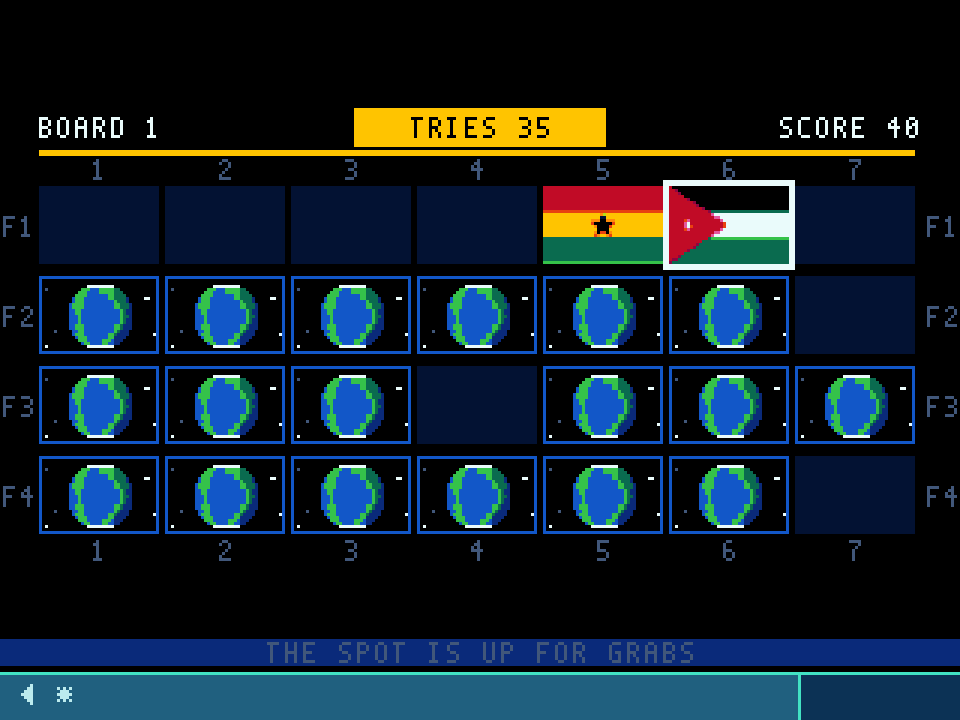
 Turn over two cards: under each Earth hides a flag.
- Two matching flags make a pair, and the country is named.
- Find every pair and the board is cleared. In a challenge, before your tries run out.
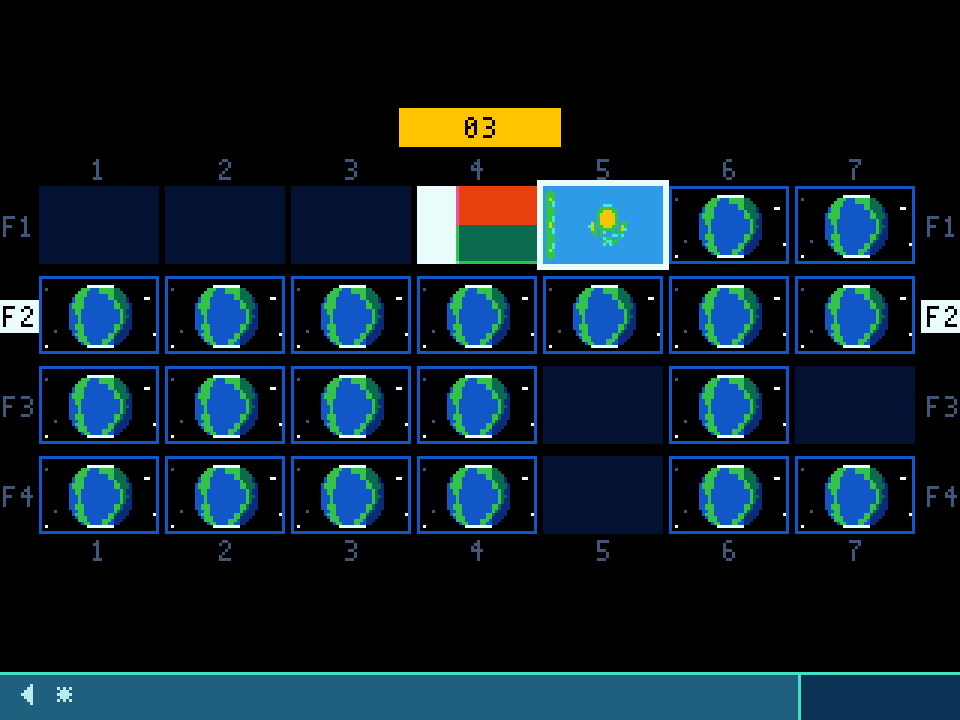
What is on the screen
The back of the cards
The Earth. The flag is underneath, and every flag comes in two copies.
The edges
Rows F1 to F4, on the left and on the right; columns 1 to 7, at the top and at the bottom. You can read a card's position wherever your eye happens to be.
The score
Above the board: the number of pairs found. In a challenge, the board, the tries left and the score.
The empty squares
A pair you have found leaves the board. Only the bare square remains, and it cannot be turned over again.
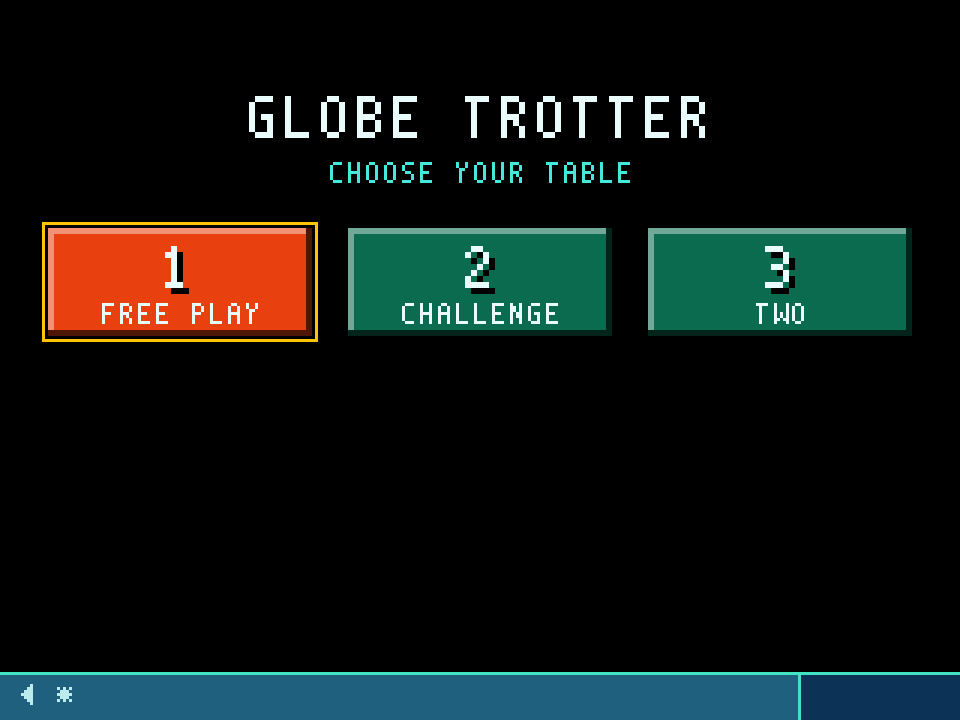
At launch: which table?
The game first asks which table you are playing at:
- Free play: no count and no limit. Turn over as many cards as it takes, at your own pace.
- Challenge: a set number of tries, boards one after another, and a score for the Masters of the games.
- Two: against someone else, each on their own device. The game opens a lobby to find you an opponent.
Press the table's number, or tap it. With the arrows, move the frame to it and press OK.
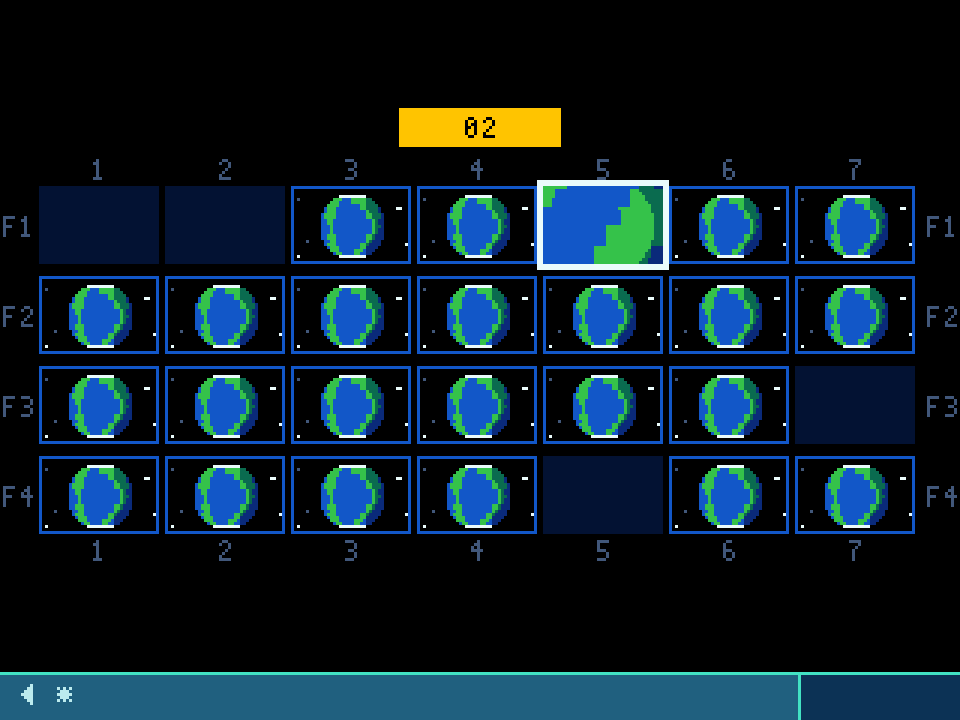
Turning a card over
Name the row and the column: F1 to F4 for the row, 1 to 7 for the column, in whichever order you like. The label you picked is framed on the edge while it waits for the other half. Press it again to let it go.
You can also tap the card, click it, or move the cursor onto it with the arrows.
The card dives towards the Earth before it shows its flag. Nothing responds in the meantime, and that is on purpose: in 1994, the world was in less of a hurry.
Aiming at an empty square or at a card that is already open costs nothing: the move is cancelled, and you start again.
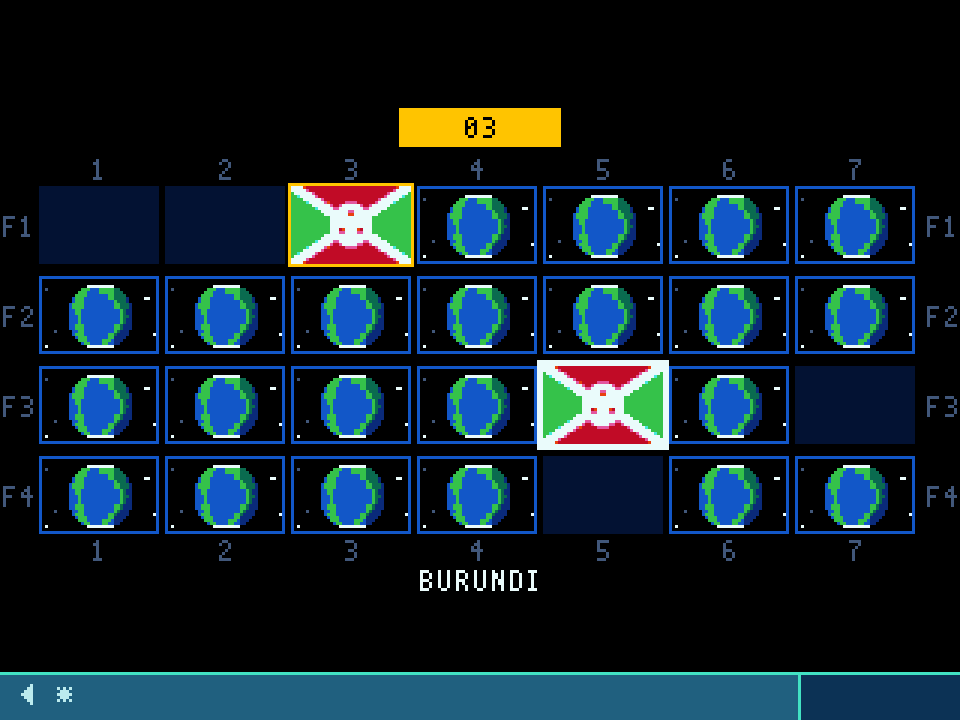
Finding a pair
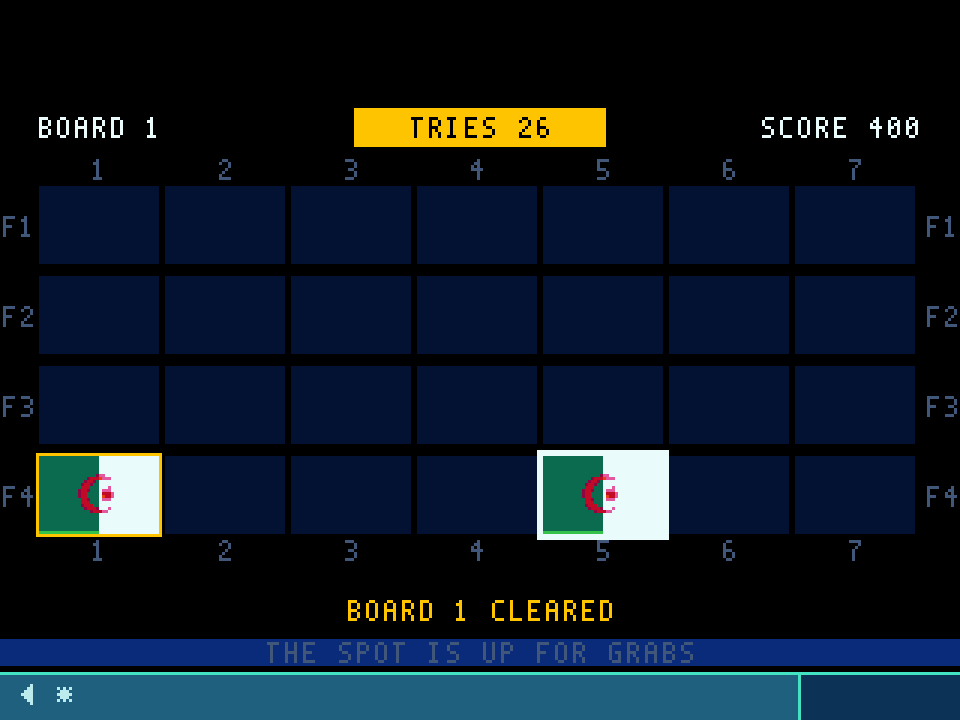
Two matching flags: both cards are framed in gold, the country's name appears under the board, and you score a pair. On your next move, they leave the board.
Two different flags: they stay open, long enough to look at them, and turn back over on the next move. Remember where they are.
With two players, whoever finds a pair plays again, and whoever misses hands over the turn. The white frame around a score shows whose turn it is. Most pairs wins.
The challenge
Every pair you turn over costs a try, matched or not. The first board gives you forty, each following board four fewer, down to twenty-four.
A pair is worth ten points times the board's number. A cleared board also earns ten points for each try left: tap the line, or press ✓, to move on to the next one.
Cards do not stay open for long. The strip under the score shows the time left: nine seconds on the first board, one less on each board after that, never less than five. At zero, the cards turn back over, at no cost: no try, no points. Memory does the playing, not notes.
When the tries run out, the game ends. Your total goes to the Masters of the games board.
All fourteen pairs found in a row: “Board 1 cleared”, and fourteen tries spent out of forty. The twenty-six left are worth two hundred and sixty points.
Controls
Phone and tablet
| tap a card | turn it over |
| tap a table | choose it |
| tap the “cleared” line | next board |
| tap the screen, challenge over | play again |
| ◀ bottom left | leave the game |
Computer
| F1 to F4 | the row |
| 1 to 7 | the column |
| ← ↑ → ↓ | move the cursor |
| Space Enter | turn over the card under the cursor; next board, or play again |
| Esc * | leave the game |
Cards can also be clicked with the mouse.
Television
| the arrows | move the cursor, or choose the table |
| OK | turn the card over, or choose the table |
| OK, board cleared | next board |
| OK, challenge over | play again |
| Back | leave the game |
Globe Trotter is also in the Education menu: it is the same game, and the same play.