RetroHub games
Mordicus
Collect every coin, and walk out alive.
 Collect every coin by walking over it.
 Don't get caught by a hungry gorilla.
 Push bananas to keep the gorillas busy.
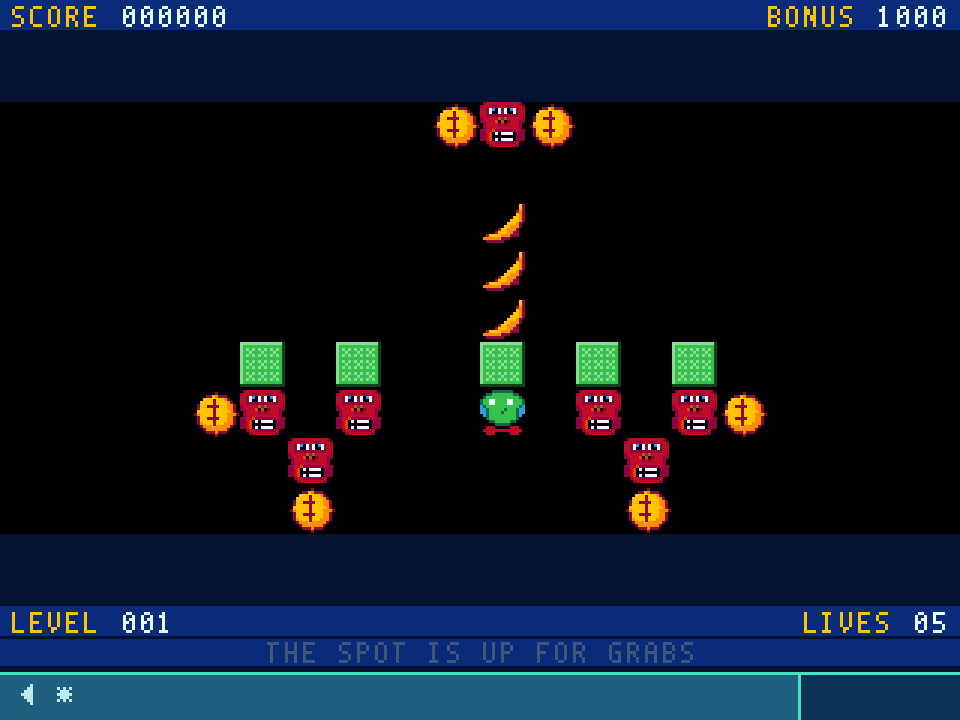
The pieces

Mordicus
That's you. He moves one square at a time, never diagonally, and pushes whatever is in front of him.
The coin
The point of the board: every one must be collected. Walk over it to pick it up.
The banana
It can be pushed. Set next to a gorilla, it gets eaten — and it changes how a blue gorilla behaves.

The green block
A neutral block you can push. Use it to reshape the board, or to take cover.

The red block
A permanent obstacle: it never moves. Two arrow blocks crashing into each other can create one.

The arrow block
It can be pushed any way, then travels on its own in the direction of its arrow until it hits something.
The red gorilla
A permanent predator. It eats bananas, it eats Mordicus, and eating never calms it down.

The blue gorilla
Hungry, it is as dangerous as the red one. But a single banana is enough to fill it up.

The full blue gorilla
Mouth and eyes closed: it stops eating and stops moving. It is now just an obstacle.
Moving, and pushing
Every step moves Mordicus one square. He never moves diagonally, and that is what makes a square diagonal from a gorilla safe.
Stepping onto an occupied square pushes whatever is there, provided the square beyond is free. A whole chain of objects moves at once. A red block never moves.
The turn, and what follows
Every step happens in two beats. Yours first. Then the board reacts: gorillas advance, arrow blocks set off, and it all plays out until nothing moves any more.
That is why a step is worth thinking about: you are not the danger to yourself — what your step sets off is.
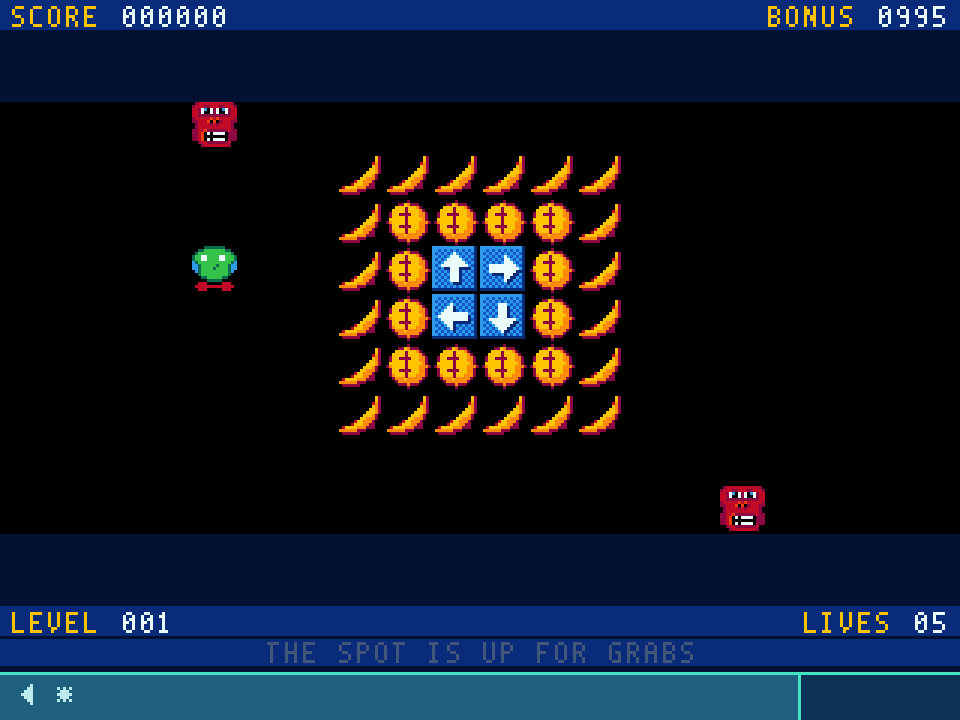
Gorillas, and how to feed them
The red one never stops. The blue one has two states: hungry, it is as dangerous as the red one; after a single banana, it closes its mouth and eyes and becomes a plain obstacle.
You do not push the banana into the gorilla. You put it on a square next to it: it will go and get it by itself during the reaction that follows.
This is the mechanic most boards are built on: a blue gorilla put to sleep at the right moment opens a path that did not exist.
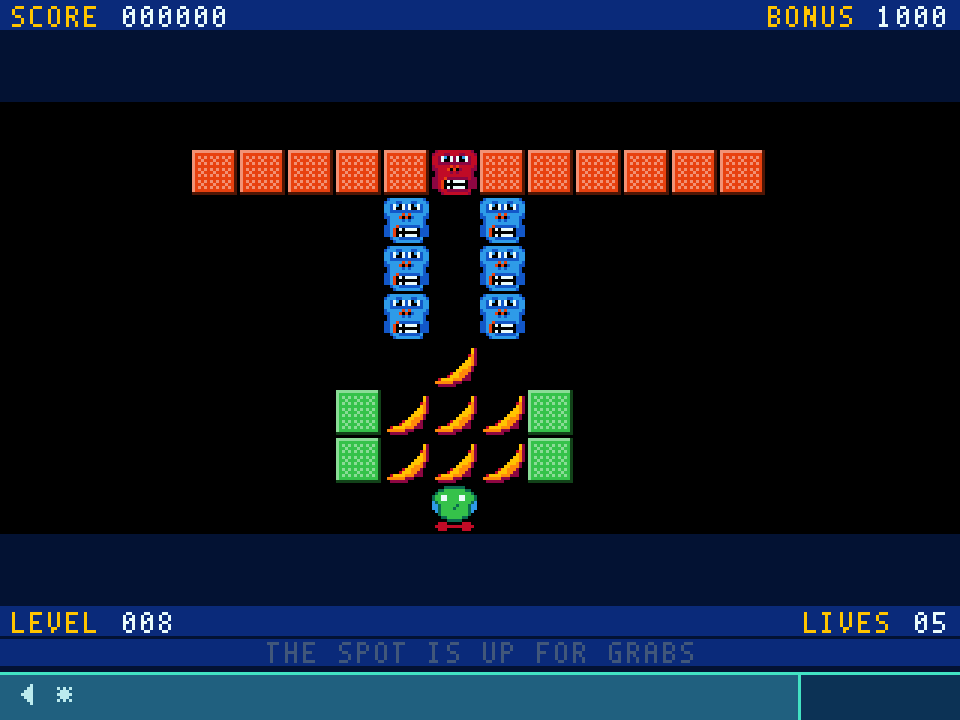
The bonus
An impossible step costs nothing, and neither do the board's own reactions. A board finished in twenty steps is therefore worth far more than the same board finished in a hundred.
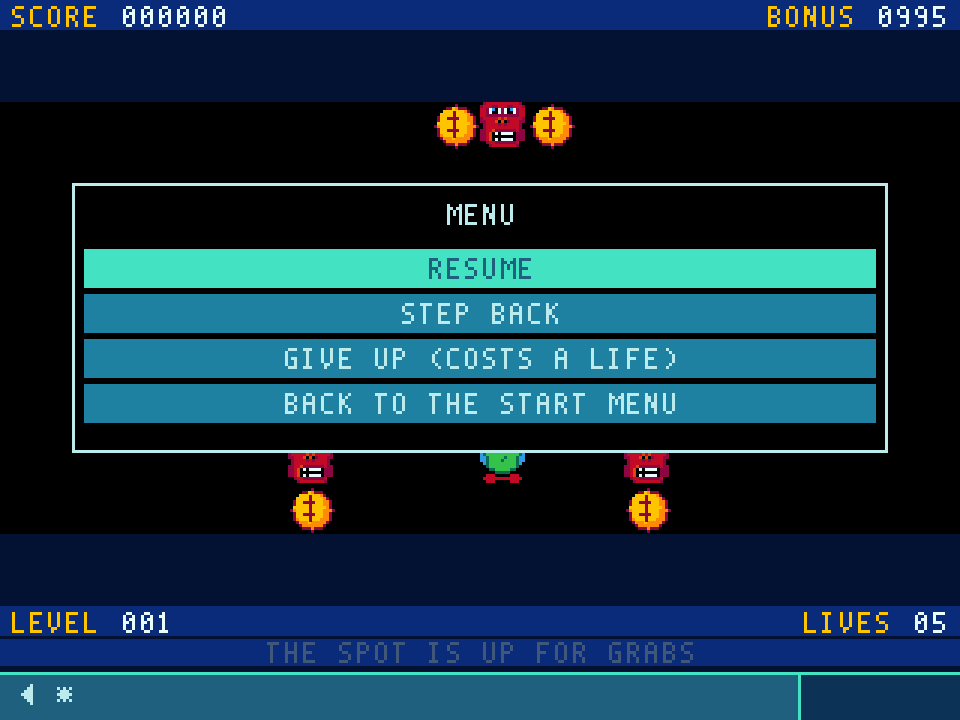
The menu: step back, give up or go back to the start
The menu key opens a panel, but only when it is your turn to move.
Step back undoes your last step and everything the board did in reaction: a pushed block comes back, a launched arrow comes back. It costs 5 bonus points. Only one step is kept, and it never undoes a death.
Give up restarts the board at the cost of a life — the way out of a board made impossible by a block pushed into a corner.
Back to the start menu returns to the opening screen without leaving the game: pick up from your highest mark, start again from the first board, or enter a code.
Coming back later
There are more than two hundred boards. Every five boards, the clear screen shows a four-digit code. Write it down: it reopens the game at that mark on any device — phone, computer, or the television in the living room.
The device you play on remembers your highest mark by itself, and the opening screen offers to pick up from there. The code is what carries it from one device to another: it is keyed in on the opening screen, under Enter a code.
Controls
Phone and tablet
| ▲ ▼ ◀ ▶ | move, push |
| F1 | the menu |
| ✓ | carry on, between boards |
| ✱ | leave the game |
The pad sits beside the screen, with the phone held sideways.
Computer
| ↑ ↓ ← → | move, push |
| F1 | the menu |
| Enter Space | carry on, between boards |
| Esc * | leave the game |
Backspace also leaves the game.
Television
| the arrows | move, push |
| ▶❙❙ play | the menu |
| OK | carry on, between boards |
| Back | leave the game |
On Android TV and Apple TV alike.